Sharks and rays of Somalia
Documenting the importance of sharks and rays to Somalia's fisheries, and the conservation gaps that leave them unprotected.
Background
In Somalia, domestic fishers and commercial fisheries have targeted coastal sharks for decades. This research initiative documents how important sharks are to the fishery, and explores the challenges and possible solutions for key conservation issues.
Fieldwork
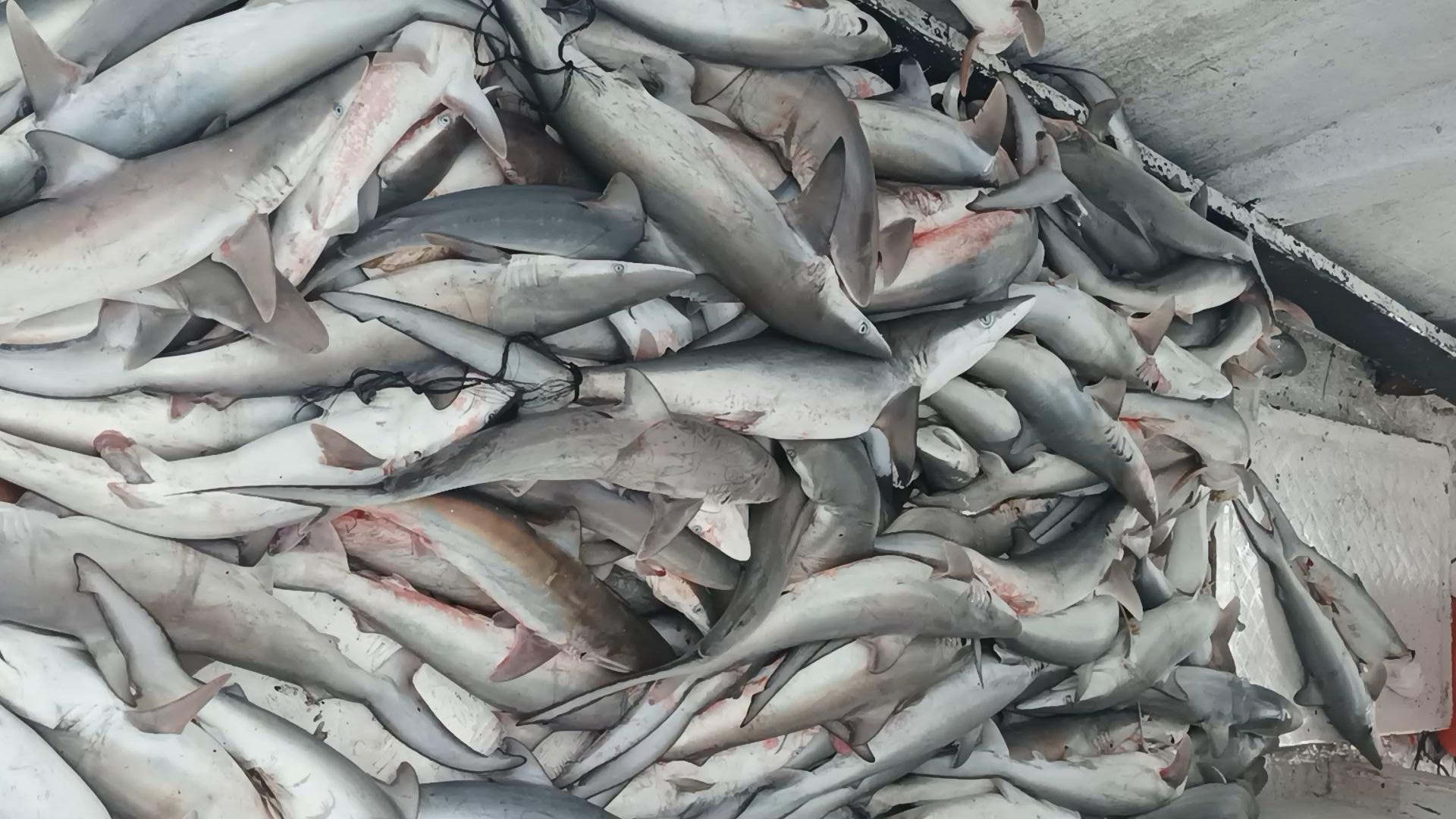
My fieldwork has taken me to landing sites across the Bari region and to the Mogadishu fish market. Through photography and data collection, I document catch composition and the realities of the domestic shark trade.

Contributions
- IUCN SSC Shark Specialist Group Regular contributor since 2022, supporting species assessments for sharks, rays and chimaeras in Somalia.
- Important Shark and Ray Areas (ISRA) Project Supporting the project's work to identify critical habitat for sharks and rays.
- The Global Status of Sharks, Rays, and Chimaeras Co-author of the Somalia section, documenting the state of research, fisheries and conservation gaps across the country.
Publications
Current project: the dwarf gulper shark
My research has expanded offshore into Somalia's largely unstudied deep waters. I am Co-Principal Investigator of Strengthening protections for the dwarf gulper shark (Centrophorus atromarginatus) in Somalia, an 18-month project funded by a US$25,000 small grant from the Shark Conservation Fund and hosted by the Berbera Maritime and Fisheries University (BMFU) Research Center.
The dwarf gulper shark is a vulnerable deep-sea species that is intensively targeted for its squalene-rich liver oil, and the trade is currently unregulated. Led by early-career scientists at the BMFU Research Center, the project will map the seasonal supply chains behind this trade, assess gaps in current fisheries regulations, and co-design practical catch measures with fishing communities.
The results will give the Ministry of Fisheries and Coastal Development the evidence it needs to commit to low-cost protections, such as catch restrictions, seasonal bans or a full prohibition.
Interested in collaborating on shark and ray research in Somalia? Get in touch.